
How to Select Mold Steel for Tooling
Learn how to select mold steel by weighing resin, cycle demand, corrosion, wear, machining route, and inspection requirements before drawing review.
How to Select Mold Steel by Evaluating Risks First
Review the service conditions, component duties, and manufacturing route before releasing a steel grade or hardness condition.
Resin Behavior
Review base polymer, fillers, additives, processing temperature, and moisture exposure to identify abrasion, corrosion, and thermal demands before naming a grade.
Lifecycle Planning
Set the required production lifecycle, expected maintenance access, and replacement approach; these determine whether durability, machinability, or repairability should lead.
Component Function
Assign steel by component function: cavities, cores, gates, slides, shutoffs, and wear inserts experience different loads, contact, and machining constraints.
Surface Requirements
Define cosmetic texture, polish target, surface-treatment needs, and allowable defects early, then confirm the selected steel supports the required finishing route.
Process Route
Plan heat-treatment sequence alongside rough machining, EDM, wire paths, grinding stock, and inspection datums to control distortion and protect critical dimensions.
Drawing-Driven Manufacturing Capabilities
Explore the process routes, precision component families, and quality controls used to move approved drawings into inspected production parts.
CNC Machining Services
Precision CNC machining services for drawing-based custom machined parts, planned around material, critical dimensions, datums, tool access, surface requirements, and inspection needs before production commitments are made.
Upload a Drawing
CNC Milling Services
Custom CNC milling services for prismatic parts, mold plates, inserts, and complex features. Tool paths, workholding, machining allowances, and access constraints are reviewed against the drawing and applicable quality requirements.
Upload a Drawing
CNC Turning Services
Precision CNC turning services for shafts, pins, sleeves, bushings, and rotational components. SUUXIANG evaluates concentricity, datum relationships, material condition, thread requirements, and downstream grinding or heat-treatment needs.
Upload a Drawing
5-Axis Machining
5-axis CNC machining supports multi-face and contoured components where orientation, feature access, and setup reduction affect dimensional control. The process route is selected after reviewing geometry, tolerance stack, material, and inspection requirements.
Upload a Drawing
Swiss & Micro Machining
Swiss machining and micro machining support small, slender, and detail-intensive parts such as pins, micro features, and connector-related components. Drawing review addresses material behavior, feature accessibility, critical dimensions, and practical inspection methods.
Upload a Drawing
Wire EDM & Sinker EDM Services
Wire EDM and sinker EDM services support hard materials, sharp internal features, narrow slots, complex profiles, and cavity details. Electrode strategy, wire path, flushing, recast-layer considerations, and finishing requirements are defined for the application.
Upload a Drawing
Precision Grinding
Precision surface and profile grinding supports flatness, parallelism, form control, and final sizing after machining or heat treatment. Grinding stock, datum sequence, wheel access, and measurement methods should be established before release.
Upload a Drawing
Mold Core Inserts & Mold Cavity Inserts
Precision mold components, including mold core and cavity inserts, are manufactured from customer drawings and specifications. Process planning considers steel selection, heat-treatment sequence, cavity geometry, EDM requirements, fitting interfaces, surface condition, and critical dimensions.
Upload a Drawing
Ejector & Ejection Components
Ejector pins, sleeves, and ejection components are produced for functional fit within the mold system. Requirements should define diameter relationships, guiding surfaces, wear conditions, material, hardness, finish, and mating-component context.
Upload a Drawing
Core Pins, Guide & Locating Components
Core pins, guide pins, bushings, and locating components are planned around positional accuracy and repeatable assembly. SUUXIANG reviews datum strategy, clearance or interference requirements, heat treatment, surface condition, and inspection criteria.
Upload a Drawing
Slides, Lifters, Gates & Mold Accessories
Mold slides, lifters, gates, and accessories are supplied as drawing-driven component families, not assumed stock items. Geometry, travel interfaces, wear surfaces, cooling or gating details, fitting requirements, and revision control guide the manufacturing route.
Upload a Drawing
Connector Mold Components
Precision connector mold components support tooling for connector features with demanding pitch, alignment, and repeatability requirements. Reviews focus on small-feature manufacturability, material, EDM or grinding strategy, mating relationships, and inspection planning.
Upload a Drawing
Stamping Die Components
Precision stamping die components are machined for applications requiring controlled profiles, clearances, alignment, and wear performance. Production planning addresses tool steel, heat-treatment sequence, wire EDM needs, grinding allowance, and dimensional verification.
Upload a Drawing
Injection Mold Components, MIM, CIM & Overmolding Tooling
Tooling and component work for injection molding, metal injection molding, ceramic injection molding, and overmolding is evaluated within verified production scope. Drawings should identify resin or feedstock context, critical interfaces, surface requirements, and quality expectations.
Upload a Drawing
Machining Materials
CNC machining materials are selected from the customer’s drawing and specification, with attention to machinability, heat-treatment state, corrosion or wear needs, dimensional stability, and material traceability required for the order.
Upload a Drawing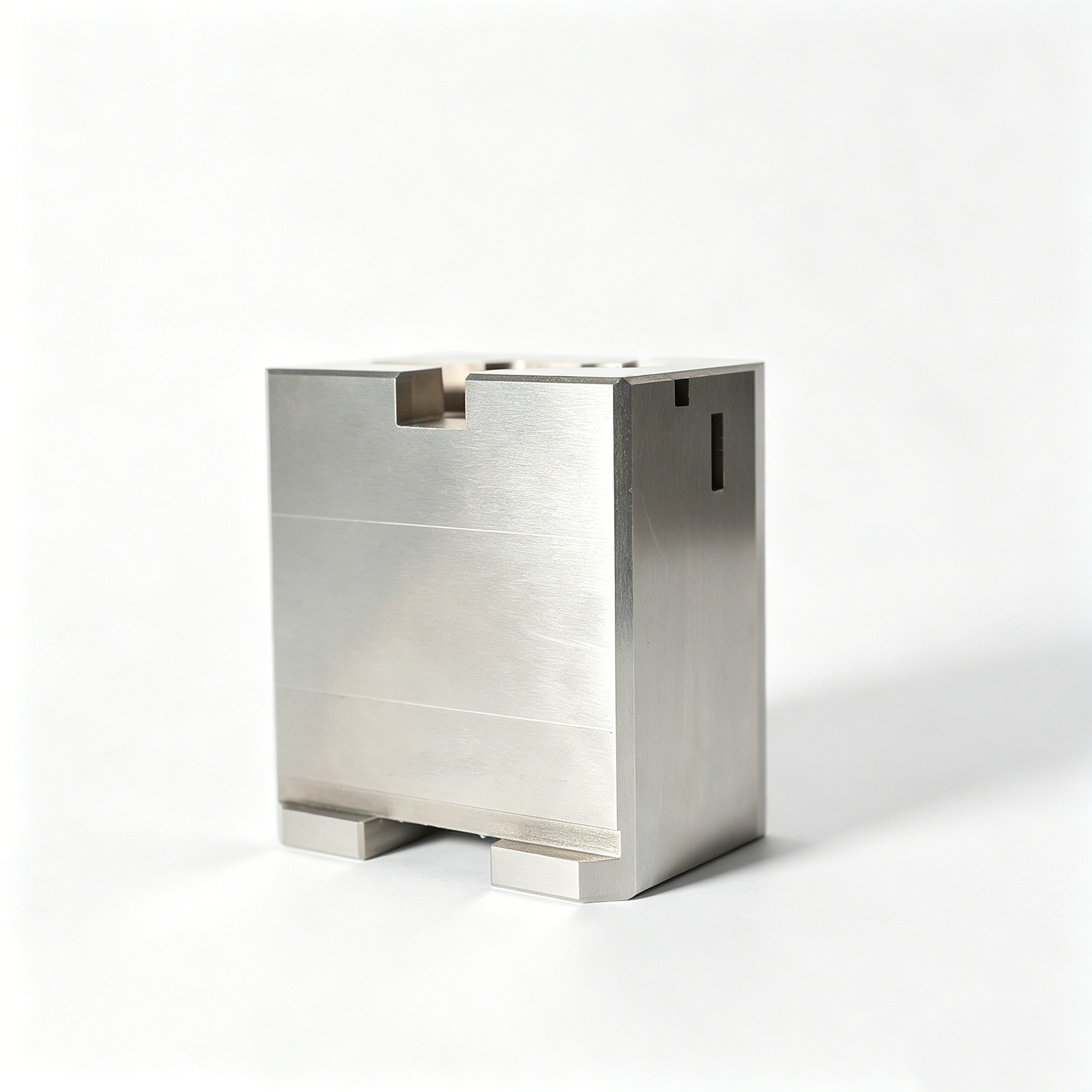
Surface Finishes & Heat Treatment
Surface finishing and heat treatment are coordinated when specified by the drawing or application. Requirements should state the required process, hardness or finish target, masking or critical surfaces, post-process allowance, and verification expectations.
Upload a Drawing
Quality, Metrology & Documentation
Precision inspection, metrology, and quality documentation are planned around the order’s critical dimensions and reporting requirements. Datums, measurement methods, sampling expectations, revision status, and traceability records should be agreed before production.
Upload a Drawing
Prototyping & Low-Volume Production
Rapid prototyping and low-volume manufacturing support engineering validation, tooling development, and controlled early production. A complete RFQ should include drawings, 3D models when available, material, quantity, quality priorities, delivery target, and application context.
Upload a DrawingHow to select mold steel across wear, corrosion, polish, and toughness
Compare the decision inputs before releasing a grade, hardness route, and machining plan for each mold component.
← Swipe left or right to view →
How to Select Mold Steel for a Manufacturable Component Plan
Set the Heat-Treatment Sequence
Define whether the component follows a pre-hardened or post-hardened route before finalizing dimensions. The sequence affects machining allowance, distortion risk, finishing operations, and inspection timing. Review hardness targets and stress-relief needs against the selected grade supplier’s technical guidance.
- Identify critical dimensions most sensitive to heat-treatment movement
- Reserve stock for post-treatment grinding or corrective finishing
- Align final hardness requirements with the component’s service conditions
- Confirm inspection checkpoints before and after heat treatment

Check Tool Access Early
A steel choice is only viable when cutters, electrodes, wire paths, and measuring tools can reach the required geometry. Review deep ribs, sharp internal corners, shutoffs, and small features with the machining route before committing to material condition or hardness.
- Map cutter reach, holder clearance, and minimum practical radii
- Flag features that need EDM rather than conventional milling
- Assess electrode access and flushing for deep or narrow cavities
- Confirm datum surfaces remain available for inspection

Plan EDM and Grinding Stock
EDM and grinding should be planned as controlled finishing operations, not late corrections. Allocate suitable stock, define datums, and sequence operations around heat treatment so critical dimensions, surface requirements, and fitting relationships remain manageable during manufacture.
- Specify grinding stock on precision faces and locating features
- Define wire-EDM start holes, wire paths, and allowable corner conditions
- Keep EDM and grinding datums consistent with drawing requirements
- Clarify surface-finish priorities before selecting the finishing route

Design for Service and Repair
Consider how wear surfaces, damaged edges, and future revisions will be accessed before selecting a steel route. Replaceable inserts, clear repair boundaries, and documented fitting relationships can reduce disruption when maintenance or dimensional correction is required.
- Separate high-wear areas into practical replaceable inserts where appropriate
- Review welding, re-machining, or re-EDM feasibility with the selected steel
- Document mating relationships, offsets, and revision-controlled dimensions
- Include maintenance access in the component and assembly review

How to Select Mold Steel: Start With Drawing Review
SUUXIANG turns project evidence into a conditional component and process plan before production commitments are made.
Submit Complete Design Inputs
Send the 2D drawing, 3D model, resin or service context, quantity, required material condition, and critical dimensions so the review starts from usable evidence.
Define Component-Level Risks
Define component function, wear, corrosion, polishing, thermal, and impact risks; identify datums, mating interfaces, surface requirements, and dimensions that control tooling performance.
Align the Process Route
Align the provisional steel route with machining access, heat-treatment sequence, EDM electrode or wire path, grinding stock, fitting needs, and feasible inspection methods.
Confirm Before Production Release
Release production only after the drawing revision, material documentation, process route, critical-dimension controls, inspection plan, and delivery requirements are confirmed for the order.
How to select mold steel: technical questions buyers ask
Practical selection criteria for drawing-driven mold components, from resin behavior and localized wear to heat treatment and inspection requirements.
How to select mold steel for the resin we plan to mold?
How to select mold steel when the resin contains glass fiber or mineral filler?
How to select mold steel for corrosive resin or humid molding conditions?
Does a high-polish or optical surface always require the hardest mold steel?
Should production volume determine the mold steel grade?
When should heat treatment be decided during mold-component sourcing?
Can SUUXIANG recommend a steel grade from a drawing alone?
What information should we provide in an RFQ for mold steel components?
How to Select Mold Steel With Drawing-Based DFM
Send your drawing, 3D model, material, heat-treatment, quantity, quality priorities, and target date for a project-specific manufacturability review.