
D2 Versus H13 Tool Steel for Tooling Decisions
Compare wear, thermal exposure, machining route, and inspection priorities before specifying D2 versus H13 tool steel for drawing-based components.
D2 Versus H13 Tool Steel: Decision-Critical Properties
Compare wear, heat exposure, toughness, heat treatment, and machining implications before defining a manufacturing route.
Wear Resistance Priority
D2’s high-carbon, high-chromium composition supports abrasion-led cold-work tooling; confirm edge geometry, impact exposure, and post-treatment hardness before release.
Thermal Cycling Exposure
Consider H13 when repeated heating and cooling raise thermal-fatigue concerns; define working temperature, cycle profile, and cooling conditions in the RFQ.
Toughness Balance
Where impact, corner loading, or crack resistance matters, compare toughness against required wear life instead of selecting material by hardness alone.
Heat Treatment Route
Specify the material standard, target hardness, tempering sequence, distortion allowance, and required documentation before final grinding or EDM finishing.
Machining Strategy
Review annealed machining, heat-treatment distortion, grinding stock, electrode access, and inspection datums early to align the route with drawing priorities.
Where D2 Versus H13 Changes the Process Route
Match material behavior, heat treatment, machining access and inspection priorities to the tooling component and production stage.

CNC Machining Services
Precision CNC machining services for custom machined parts begin with the drawing, material condition, and critical dimensions. For D2 and H13 components, the route must account for machining allowance, heat-treatment sequence, hardness targets, and any later EDM or grinding operations.
Upload a Drawing
CNC Milling
Custom CNC milling services produce prismatic mold, die and fixture features where tool access supports the required geometry. Material choice affects cutter strategy, stock allowance and whether final surfaces are milled before heat treatment or finished by grinding.
Upload a Drawing
CNC Turning
Precision CNC turning services support rotational components such as pins, sleeves, bushings and locating elements. D2 and H13 selection influences pre-hard machining parameters, heat-treatment distortion risk, grinding stock and inspection of diameters, concentricity and functional fits.
Upload a Drawing
5-Axis Machining
5-axis CNC machining helps reach compound surfaces, angled features and closely spaced details with fewer setups. For tool steels, the process review should confirm tool access, clamping, remaining stock, heat-treatment timing and whether EDM is needed for inaccessible geometry.
Upload a Drawing
Swiss & Micro Machining
Swiss machining and micro machining are suited to small, high-precision turned parts such as fine core pins, connector elements and miniature locating features. Material condition, slenderness, burr control, straightness and final inspection method should be agreed before production.
Upload a Drawing
Wire & Sinker EDM
Wire EDM services and sinker EDM services create narrow slots, sharp internal forms, deep ribs, and hardened-tool-steel features beyond practical cutter access. D2 and H13 require an electrode or wire-path strategy, finish requirements, recast-layer considerations, and allowance for final polishing or grinding.
Upload a Drawing
Precision Grinding
Precision surface and profile grinding establishes flatness, parallelism, profiles and controlled functional fits after machining or heat treatment. The plan should define grinding stock, datum surfaces, distortion checks and the measurement method for the specified tolerance.
Upload a Drawing
Mold Core & Cavity Inserts
Precision mold core inserts and mold cavity inserts are selected around resin, part geometry, wear exposure, cooling needs, and surface requirements. D2 may suit wear-focused insert features, while H13 is commonly considered where thermal cycling and toughness affect the tooling decision.
Upload a Drawing
Ejector & Ejection Components
Ejector pins, sleeves and ejection components must balance wear resistance, fit, lubrication conditions and repeated movement. Material and heat-treatment requirements should be reviewed with the mating bore, clearance, surface finish, straightness and replacement or maintenance strategy.
Upload a Drawing
Core Pins, Guide & Locating Components
Core pins, guide pins and locating components establish repeatable molded-part features and mold alignment. The process route should address material grade, hardness, diameter control, datum relationships, guiding fit, wear exposure and whether grinding provides the final functional surface.
Upload a Drawing
Slides, Lifters, Gates & Mold Accessories
Mold slides, lifters, gates and accessories combine moving interfaces, shutoff geometry and flow-related features. Tool steel selection should reflect sliding wear, impact, thermal exposure and polishing needs, while machining plans account for fitting, EDM details and datum-controlled assembly.
Upload a Drawing
Connector Mold Components
Precision connector mold components often contain fine pitch, small cavities, delicate cores and tightly controlled mating relationships. D2 versus H13 decisions should consider feature wear, thermal behavior, EDM access, polishing requirements, inspection resolution and revision-controlled interchangeability.
Upload a Drawing
Stamping Die Components
Precision stamping die components include punches, dies, inserts, guide elements and wear parts. D2 is often evaluated for abrasive wear resistance, while H13 may be considered for toughness and heat-related loading; final selection depends on strip material, geometry and service conditions.
Upload a Drawing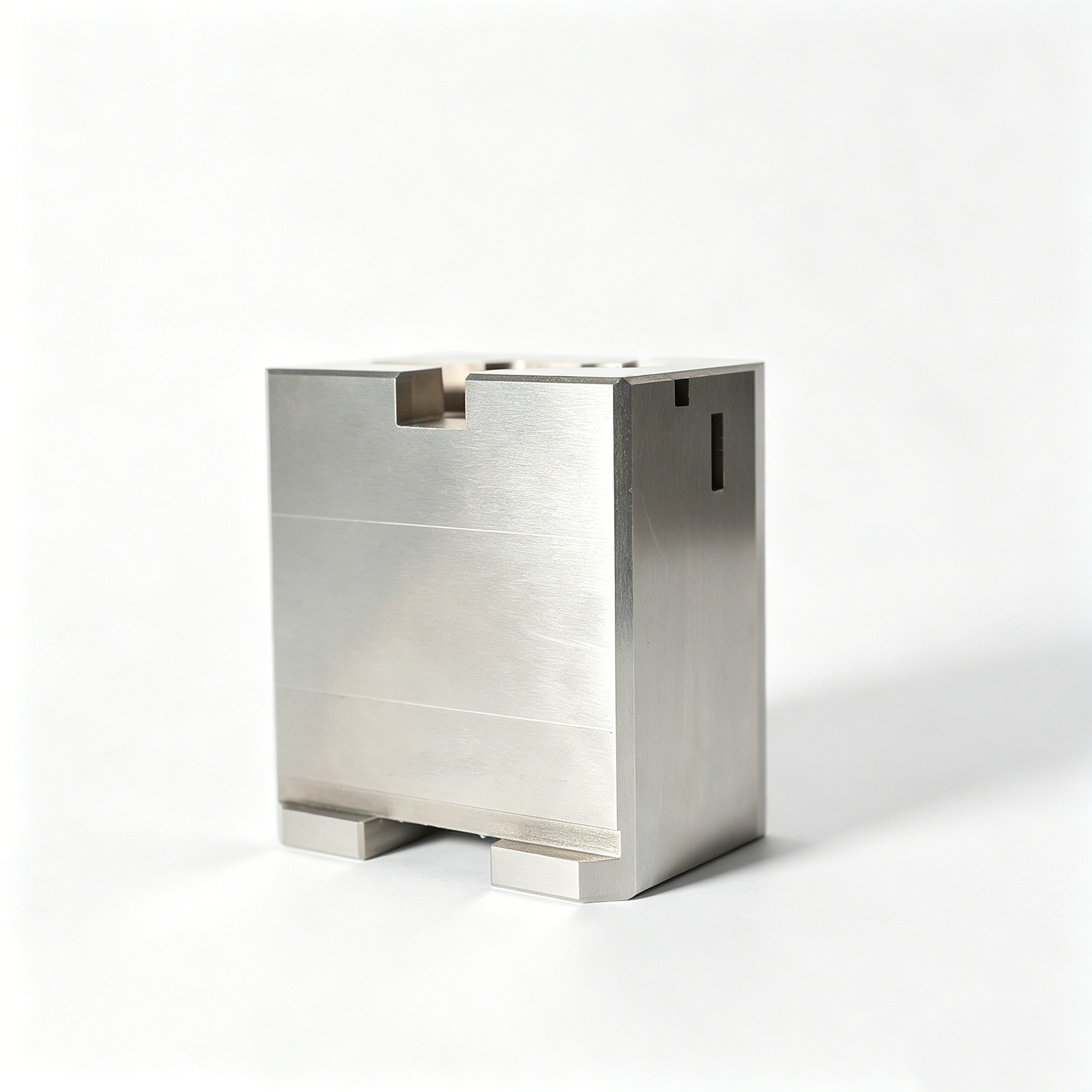
Injection, MIM, CIM & Overmolding Tooling
Injection mold components and tooling for MIM, CIM, and overmolding require process planning around cavity geometry, material flow, thermal conditions, inserts, and molding-specific wear. Tool steel selection, machining route, EDM strategy, fitting, and inspection scope should follow verified application requirements.
Upload a Drawing
Machining Materials
CNC machining materials should be selected from drawing requirements, operating environment, wear mechanism, heat exposure and downstream finishing. For D2 and H13, confirm supply condition, heat-treatment route, hardness requirement, corrosion considerations and the evidence needed for material traceability.
Upload a Drawing
Surface Finishes & Heat Treatment
Surface finishing and heat treatment change component performance as well as dimensional risk. Define the required treatment, target condition, coating or polish requirement, masking needs, distortion allowance and post-treatment grinding or inspection before committing to the manufacturing route.
Upload a Drawing
Quality, Metrology & Documentation
Precision inspection, metrology and quality documentation should follow the part’s critical dimensions, datums and functional interfaces. A suitable plan identifies measurement methods, reporting requirements, material or heat-treatment records where applicable, revision status and traceability expected for the order.
Upload a Drawing
Prototyping & Low-Volume Production
Rapid prototyping and low-volume manufacturing supports drawing-based validation, design changes and controlled initial builds. Material selection should distinguish prototype intent from production service conditions, especially when D2 or H13 behavior, heat treatment, finishing and inspection affect functional results.
Upload a DrawingD2 Versus H13 Tool Steel Comparison for Drawing-Based RFQs
Compare operating conditions, process implications, and documentation questions before selecting a material route for custom tooling components.
← Swipe left or right to view →
From Drawing Review to Inspected Tooling Components
For D2 versus H13 tool steel components, SUUXIANG aligns material condition, heat treatment, critical dimensions, process access and inspection expectations before production commitments.
Submit Complete Drawing Data
Provide 2D drawings, 3D models when available, material grade, quantity, application context, target delivery date, and reporting requirements for an informed technical review.
Define Critical Requirements
Identify datums, tolerance stacks, surface requirements, mating features, heat-treatment condition, and critical-to-quality dimensions so the manufacturing route reflects functional priorities.
Review DFM and Process Access
Evaluate machining access, EDM electrode or wire paths, grinding stock, distortion risk, and fitting needs before confirming a route for D2 versus H13 tool steel.
Control Revisions Before Production
Confirm the approved drawing revision, agreed material and process requirements, inspection method, and delivery details before machining begins, keeping changes traceable throughout the project.
Inspect Against the Plan
Machine, EDM, grind, fit, and inspect components according to the agreed plan, with final documentation matched to the order and verified inspection requirements.
D2 Versus H13 Tool Steel FAQs for Engineering Buyers
Selection questions for drawing-driven tooling components, from material condition through inspection planning.
How do I choose D2 versus H13 tool steel for a tooling component?
Is D2 versus H13 tool steel mainly a cold-work versus hot-work decision?
What should I verify before specifying D2 versus H13 tool steel on a drawing?
Should CNC machining happen before or after heat treatment?
Can wire EDM be used on hardened D2 or H13 components?
How much grinding allowance should I leave after heat treatment?
What inspection evidence should an RFQ for D2 or H13 parts include?
D2 Versus H13 Tool Steel: Submit Your Drawing
Send the drawing, model, material requirement, quantity, quality expectations and delivery target for a disciplined DFM and process review.