
How Tolerances Affect Machining Cost in CNC Work
Learn how tolerances affect machining cost before RFQ submission, with practical guidance on critical dimensions, process routes, and inspection planning.
Tolerance Cost Is a Process-Planning Decision
Dongguan SuuXiang Precision Mold Co., Ltd., operating publicly as SUUXIANG, was established in 2010 in Chang’an Town, Dongguan, China. We help international engineering and sourcing teams turn drawings into inspected custom machined parts, precision mold components, connector tooling, and die components. Our work begins with the functional intent behind the drawing, not a generic price list.
Before quoting, we review critical dimensions, datum strategy, tolerance stack, material and heat-treatment requirements, surface priorities, machining access, and inspection expectations. This makes how tolerances affect machining cost a practical project discussion: tighter requirements may change setups, EDM or grinding routes, measurement methods, and delivery risk.
SUUXIANG coordinates CNC milling and turning, multi-axis machining, EDM, precision grinding, fitting, and inspection around the needs of each drawing-driven project. We assess manufacturability and dimensional capability against current project evidence, then keep revision control and inspection requirements visible through production.

What Drives Tolerance-Related Machining Cost
Assess the manufacturing controls each critical dimension creates before committing a drawing to production.
Process Route Changes
Tighter features may require a different sequence of CNC machining, EDM, grinding, fitting, or heat-treatment control, adding operations and coordination.
Setup and Tooling
Precision requirements can demand dedicated fixturing, additional setups, shorter tool engagement, tool compensation, and more cautious material removal.
Datum Strategy Matters
Clear functional datums reduce ambiguous measurement and re-clamping risk, helping the machining route control critical relationships without over-controlling every feature.
Inspection Scope Expands
Tight critical dimensions may require more in-process checks, specialized measurement methods, inspection reporting, and documented traceability aligned with the drawing.
Capability Needs Review
Material behavior, geometry, access, heat treatment, and surface requirements affect whether a tolerance needs process controls beyond a standard machining route.
Function Guides Precision
Apply the strictest limits to mating, locating, sealing, or motion-critical features; allow reasonable variation elsewhere when it does not affect function.
Where Tolerance Decisions Change Cost, Risk, and Lead Time
Match process routes, inspection methods, and drawing requirements to the functional dimensions that matter before production begins.

CNC Machining Services
Precision CNC machining services for drawing-based parts requiring a defined balance of tolerance, geometry, material condition, and inspection evidence. Review critical dimensions, datums, tool access, and quantity early so the process route reflects functional requirements rather than blanket tight tolerances.
Upload a Drawing
CNC Milling Services
Custom CNC milling services suit prismatic parts, pockets, faces, and complex mold features. Tolerance decisions should account for cutter reach, clamping, wall stiffness, material condition, and any finishing or grinding stock needed to protect critical surfaces.
Upload a Drawing
CNC Turning Services
Precision CNC turning services support rotational features such as shafts, sleeves, bushings, and threaded components. Define functional diameters, runout relative to datums, surface requirements, and mating conditions so turning, secondary machining, and inspection can be planned correctly.
Upload a Drawing
5-Axis Machining
5-axis CNC machining can improve access to angled, contoured, and multi-face features while reducing re-clamping risk. It does not remove the need to define functional datums, tool reach, surface transition requirements, or an appropriate inspection strategy.
Upload a Drawing
Swiss & Micro Machining
Swiss machining and micro machining are relevant for small, slender, or detail-intensive components where support, concentricity, burr control, and handling affect results. Specify critical features and mating conditions clearly; micro-scale tolerances require a practical measurement method.
Upload a Drawing
Wire & Sinker EDM
Wire EDM services and sinker EDM services address hardened materials, narrow slots, internal corners, fine profiles, and features beyond conventional cutter access. Discuss wire paths, electrode strategy, corner radii, recast-layer considerations, and finishing requirements before committing dimensions.
Upload a Drawing
Precision Grinding
Precision surface and profile grinding provides controlled flatness, parallelism, profile accuracy, and final-size adjustment where machining alone is not the right finish route. Drawings should identify grind-critical faces, datum relationships, stock allowance, and surface requirements.
Upload a Drawing
Mold Core & Cavity Inserts
Precision mold core inserts and mold cavity inserts require tolerance decisions based on shutoff conditions, part geometry, cooling interfaces, steel condition, and assembly datums. Define critical molding surfaces separately from nonfunctional features to focus machining, EDM, grinding, fitting, and inspection effort.
Upload a Drawing
Ejector & Ejection Components
Ejector pins, sleeves, and ejection components depend on fit, alignment, wear behavior, and movement within the mold assembly. Provide hole or sleeve relationships, material and heat-treatment requirements, surface expectations, and any clearance or venting function affecting manufacture.
Upload a Drawing
Core Pins, Guide & Locating Components
Core pins, guide pins, and locating components establish feature position and repeatable mold alignment. Specify the controlling datums, fit class or functional clearance, engagement length, hardness condition, and mating-component context instead of applying the same tolerance across every dimension.
Upload a Drawing
Slides, Lifters, Gates & Mold Accessories
Mold slides, lifters, gates, and accessories combine moving interfaces with molding and assembly requirements. Critical decisions include travel direction, shutoff geometry, wear surfaces, lubrication or clearance needs, gate geometry, and the sequence of heat treatment, EDM, grinding, and fitting.
Upload a Drawing
Connector Mold Components
Precision connector mold components often contain closely spaced cavities, fine features, and position-sensitive mating geometry. Identify pin layout datums, insert interfaces, electrode access, polishing needs, and inspection points early to manage tolerance stack and revision risk.
Upload a Drawing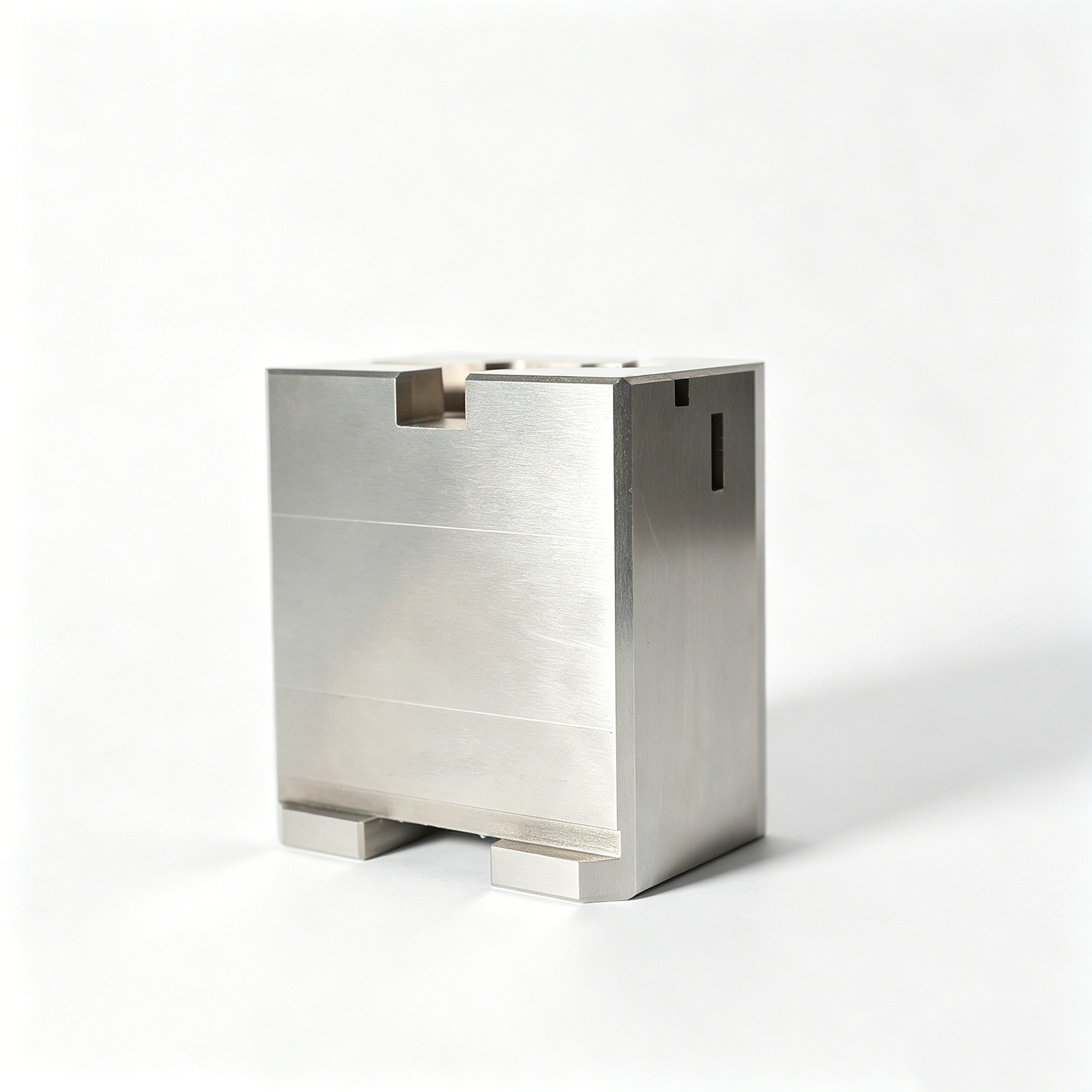
Stamping Die Components
Precision stamping die components require attention to cutting edges, clearance relationships, guide alignment, wear surfaces, and material condition. A usable RFQ distinguishes functional edge geometry from general dimensions and includes mating-part information where die performance depends on assembly relationships.
Upload a Drawing
Injection, MIM, CIM & Overmolding Tooling
Injection mold components and tooling for MIM, CIM, and overmolding should be evaluated against the relevant molding process, shrinkage assumptions, insert interfaces, venting, gate strategy, and post-molding function. Tooling work is confirmed only after drawing review and project-specific manufacturing scope assessment.
Upload a Drawing
Machining Materials
CNC machining materials affect achievable geometry, tool wear, distortion risk, finishing sequence, and inspection timing. State the material grade, supply condition, certification needs, heat-treatment status, and any application-driven properties so process planning does not rely on assumptions.
Upload a Drawing
Surface Finishes & Heat Treatment
Surface finishing and heat treatment can change dimensions, surface condition, wear behavior, and the appropriate order of machining operations. Identify finish-critical and grind-after-treatment features, masking needs, roughness expectations, and whether final inspection occurs before or after treatment.
Upload a Drawing
Quality, Metrology & Documentation
Precision inspection, metrology, and quality documentation should follow the drawing’s critical dimensions, datum scheme, and agreed reporting plan. Clarify required measurement methods, sampling or full inspection expectations, revision status, material records, and any traceability needed for acceptance.
Upload a Drawing
Prototyping & Low-Volume Production
Rapid prototyping and low-volume manufacturing benefit from early decisions about which dimensions are function-critical, which can remain standard, and what documentation is required. Supply the drawing, 3D model, material, quantity, delivery target, and quality priorities for a practical review.
Upload a DrawingA Practical Review Process for Tolerance-Critical RFQs
Move from drawing requirements to an evidence-led manufacturing and inspection plan before production commitments are made.
Submit the Drawing Package
Provide the 2D drawing, 3D model when available, material, quantity, application context, delivery target, and any inspection or reporting requirements.
Identify Critical Requirements
Clarify functional dimensions, datums, mating relationships, surface requirements, tolerance stacks, heat-treatment sequence, and features that control fit, sealing, motion, or connector performance.
Review the Process Route
Evaluate tool access, part rigidity, machining allowance, fixture strategy, wire EDM or electrode needs, grinding stock, and suitable CNC, EDM, grinding, or fitting operations.
Align Inspection Planning
Define measurement methods, critical-dimension checks, sampling or reporting expectations, revision controls, and documentation needed to verify the agreed drawing requirements before delivery.
Tolerance-Cost Questions for CNC RFQs
Practical guidance for defining critical dimensions, process allowances, inspection needs, and drawing information before quotation.
How do tolerances affect machining cost when only a few dimensions are critical?
How does datum strategy affect machining cost and inspection risk?
How do tolerances affect machining cost for EDM and grinding features?
Should every dimension on a CNC drawing have a tight tolerance?
How do tolerances affect machining cost when a part needs heat treatment?
What inspection information should I include in a tolerance-critical RFQ?
Can a supplier recommend tolerance changes before production?
How Tolerances Affect Machining Cost: Submit Your Drawing
Share your drawing, material, quantity, critical dimensions, inspection needs, and delivery target for a tolerance-focused DFM and quotation review.