
Engineering resource
CNC Quotation Comparison Worksheet
This worksheet helps teams compare CNC quotations on the same technical basis. It records the part revision, material and process assumptions, quality evidence, commercial scope, and delivery interpretation behind each offer. Use it to identify unanswered questions before supplier selection, purchase approval, or engineering release.
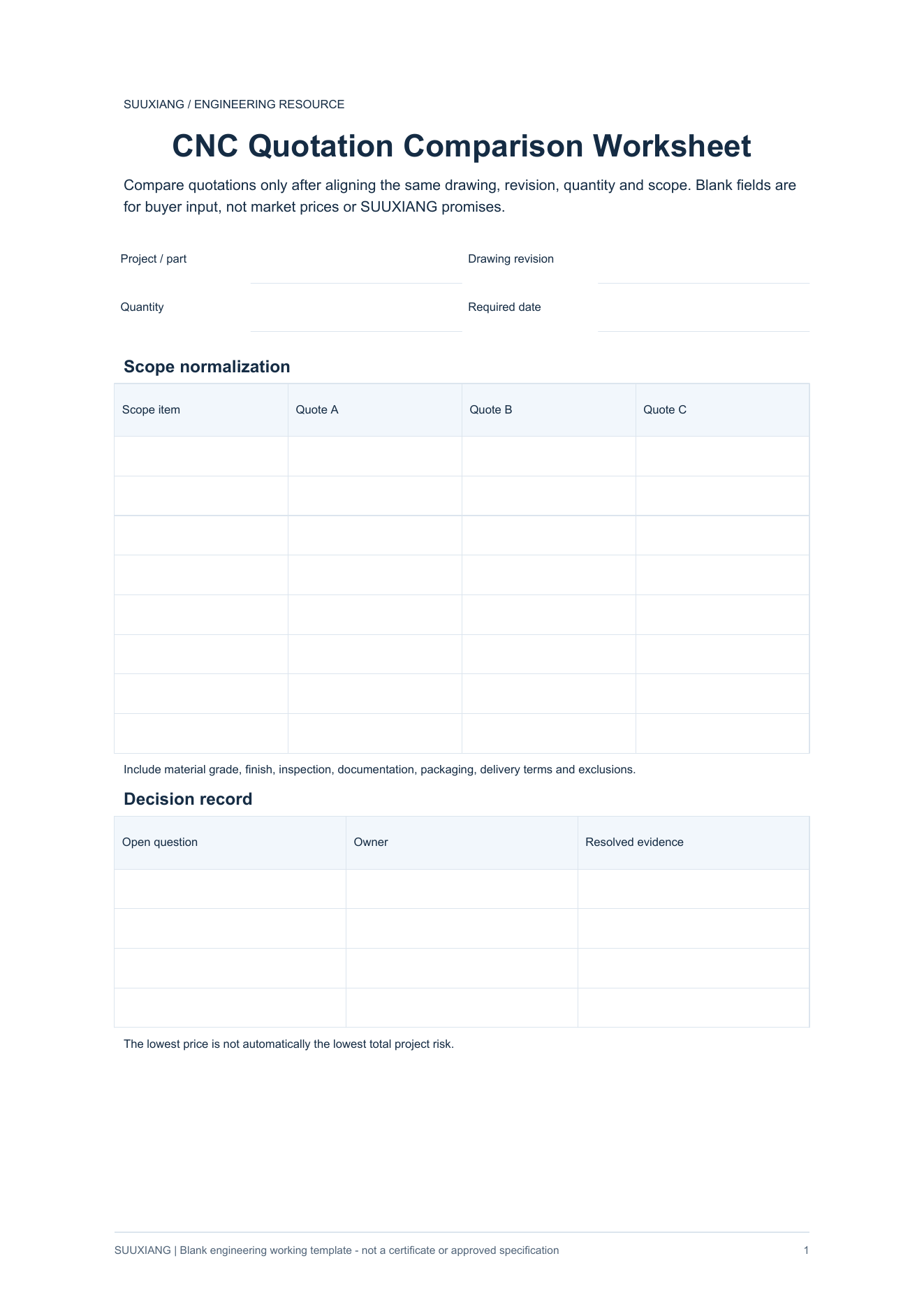
Download the blank working template
This editable-by-hand PDF is a blank engineering worksheet, not a completed inspection report, certificate, customer record or approved specification.
Download PDF template →On this page
What the blank PDF records
The blank PDF is a structured comparison record, not a quotation itself. It captures the part number, drawing revision, quantity, material grade, requested process, finish, tolerances, inspection expectations, packaging, delivery basis, and quoted exclusions. It also provides space to note whether a supplier response is explicit, conditional, missing, or based on an alternate assumption. Entries should identify the quotation version and date being compared.
Normalize the technical basis
Begin by selecting one controlled requirement set for all quotations. Check that each response addresses the same geometry, material grade, machining route, finish condition, critical characteristics, and acceptance criteria. A CNC process is suitable only in relation to the part and its requirements; there is no universally best process. Where the quotation differs from the request, record the difference as a decision item rather than silently treating it as equivalent.
Use the worksheet in review
Enter each supplier offer in a separate comparison column or record. Transcribe commercial and technical statements exactly enough to preserve their intended condition, then flag unclear items for written clarification. Compare unit price, tooling or setup treatment, minimum lot conditions, freight treatment, payment terms, validity period, and delivery wording only after the technical scope is aligned. Distinguish a stated commitment from an estimate, a target, or an unstated assumption.
Attach controlled supporting evidence
Attach the controlled drawing and revision history, request-for-quotation package, supplier quotation, material specification, applicable standards, inspection plan or sampling requirement, finish specification, and any approved deviation or clarification. Include correspondence that changes scope, but label its status clearly. If a CAD model, bill of materials, packaging instruction, or delivery schedule governs the decision, attach the controlled version or reference it by document number and revision.
Approval and record limits
Engineering confirms technical interpretation and disposition of deviations. Quality confirms inspection and acceptance evidence requirements. Purchasing reviews commercial completeness and supplier communication. The designated project, procurement, or quality authority approves the completed comparison according to the organization’s approval process. A completed worksheet supports a sourcing decision, but it is not a certificate, a completed inspection record, material traceability, or proof that any part conforms. Final acceptance remains governed by the applicable controlled requirements.
Questions engineers ask
Can this worksheet compare quotations with different materials or finishes?
Yes, but do not treat unlike offers as directly comparable. Record each alternate material, finish, process, or tolerance interpretation as an exception. Engineering should determine whether it meets the drawing, material specification, applicable standard, or approved agreement before commercial comparison.
Does a completed worksheet replace incoming inspection or supplier documentation?
No. It organizes the basis for a quotation decision. Incoming inspection, certificates, test reports, first-article records, and traceability documents remain separate controlled evidence when required by the purchase order, drawing, standard, inspection plan, or engineering agreement.
References and further reading
These resources explain related design and manufacturing principles. Project limits, acceptance criteria and process choices must be agreed against the current drawing.
Publication note: this article is general design guidance, not a material specification, a certified inspection report or a guarantee of process capability.
Turn the drawing into a clear manufacturing brief.
Share the current drawing, material, finish and inspection requirements for a project-specific discussion.